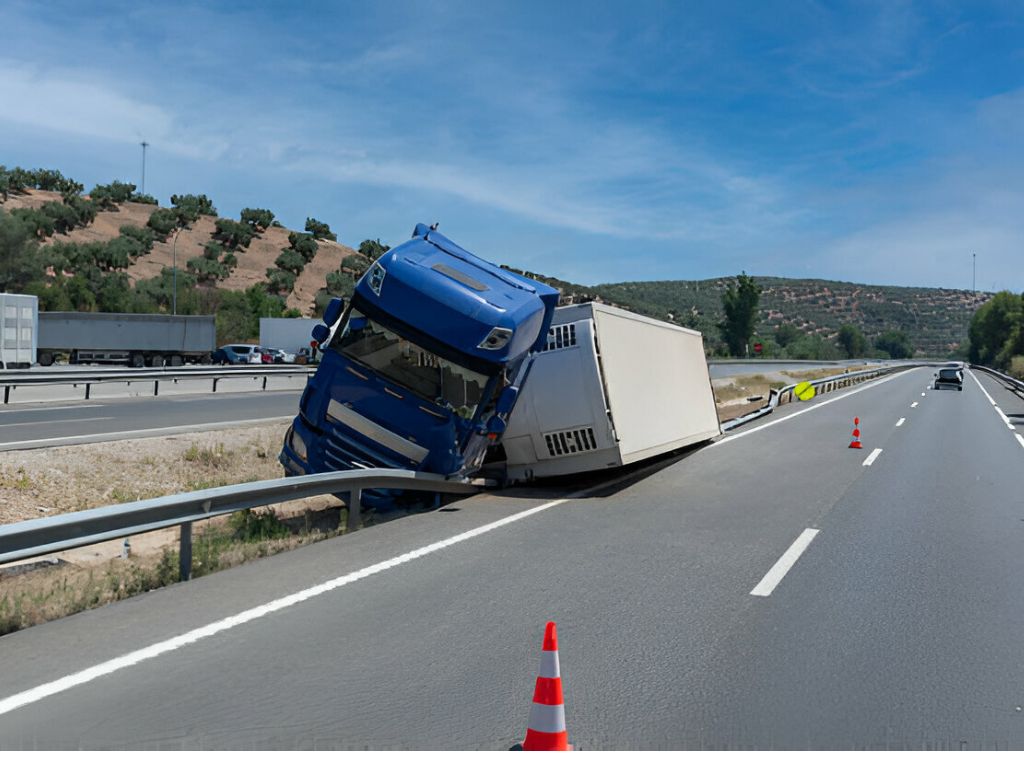
A collision with a commercial semi-truck on the Glenn Jackson Bridge or the busy interchanges of I-205 transforms a routine commute into a life-altering event in a matter of seconds. You likely feel overwhelmed by the physical pain of your injuries and the mounting pressure of medical bills, missing work, or not being able to hold your child. At D’Amore Law Group, we understand that you need more than just legal advice at this time; you need a steadfast advocate to carry the legal burden so you can focus on healing.
Contact us today at 503-222-6333 to discuss your case and learn how we can help you.
Why Are Truck Accidents on I-205 Near Vancouver So Frequent?
The Interstate 205 corridor serves as a primary regional freight artery, yet its design creates significant hazards as heavy commercial vehicles and passenger cars share limited space. Drivers navigating the stretch between Vancouver and Portland face a high-pressure environment marked by sudden speed changes and complex navigation.
What Makes the I-205 Bridge Especially Dangerous for Semi-Trucks?
The Glenn Jackson Bridge is a challenging driving section in the Pacific Northwest due to its length, exposure, and high traffic volume. These conditions contribute to a heightened risk of serious truck accidents on the I-205 bridge, including the following factors:
- High crosswinds. The open exposure over the Columbia River subjects high-profile trailers to powerful gusts that can cause a driver to lose lane control.
- Narrow shoulders. The lack of escape space on the bridge means that a mechanical failure or a minor swerve often results in a multi-vehicle pileup rather than a controlled stop.
- Inconsistent surface traction. Moisture from the river and frequent temperature drops create slick patches, significantly increasing the stopping distance required for heavy trucks.
These environmental conditions, combined with the weight and braking limitations of a commercial vehicle, make the bridge a high-risk area for catastrophic collisions.
Why Does Merging Create Crash Risks?
The interchanges connecting I-205 to State Route 14 and Mill Plain Boulevard require drivers to make rapid decisions while navigating significant blind spots. Common merge crash risks in Vancouver include:
- Short merge lanes. Large trucks require substantial space to accelerate, often struggling to do so before the lane ends.
- Improper mirror usage. Commercial drivers who fail to check their blind spots during a lane change can easily crush smaller vehicles traveling alongside them.
- Aggressive following distances. When traffic slows suddenly at a merge point, a semi-truck following too closely cannot stop in time to avoid a rear-end collision.
When a driver fails to yield the right of way or ignores the physical limitations of their vehicle at these merge points, the resulting I-205 semi crash in Vancouver often causes permanent, life-changing injuries.
What Steps Should You Take to Protect Your Rights After a Crash?
The actions you take in the immediate aftermath of a collision determine the strength of your future legal claim. They should include:
- Exchanging name, address, and insurance with other drivers, if anyone is injured or there is vehicle damage;
- Identifying witnesses who saw the accident;
- Photographing the scene and taking pictures of vehicles;
- Seeking immediate medical attention, and
- Filing an official report, as required by Washington law.
Following these steps ensures that the evidence remains intact as we begin building a comprehensive case for trial or settlement negotiations.
Why Should You Choose D’Amore Law Group for Your Case?
If you are involved in one of the frequent truck accidents on I-205 near Vancouver, it’s critical to work with an attorney who is certified by the National Board of Trial Advocacy. Our firm offers this unique level of expertise, led by Tom D’Amore, the only Board-Certified Truck Accident Attorney in Oregon. Since opening our doors in 1994, the D’Amore Law Group has successfully represented thousands of clients across Oregon and Washington.
We do not settle cases for the first offer; we prepare every file as if it is going to trial, a commitment demonstrated by our $26.4 million jury verdict in a catastrophic truck accident case, which remains the highest semi-truck accident verdict in the state. Our dedicated team, including both English- and Spanish-speaking members, invests in advanced technology and expert resources to ensure that every client receives the advantage they deserve on their path to justice.
Protect Your Rights After a Truck Accident Today
You deserve a truck accident attorney in Vancouver who understands the complexities of federal trucking regulations and has a proven track record of securing substantial verdicts and settlements. Contact D’Amore Law Group today to schedule your free case evaluation and learn how we will fight for your future.
Frequently Asked Questions
Why Do Merge-Point Truck Crashes Happen on I-205?
Merge-point truck crashes on I-205 often occur because commercial trucks have limited acceleration, large blind spots, and longer stopping distances. When passenger vehicles merge abruptly or truck drivers misjudge available space, even minor timing errors can result in serious collisions. Traffic congestion and short on-ramps further increase the risk.
Are Bridge Crashes Treated Differently from Other Truck Accidents?
Separate laws do not govern bridge crashes, but they often involve additional liability considerations. Limited shoulders, wind exposure, and the inability to safely stop can affect how fault is evaluated. Bridge collisions also tend to result in more severe injuries, which can significantly impact damages in a settlement or verdict.
Who Is At Fault in Multi-Vehicle Truck Accidents?
Fault in multi-vehicle truck accidents depends on each driver’s specific actions. Liability may rest with one or more parties, including the truck driver, another motorist, the trucking company, or a third party responsible for maintenance or cargo loading. Washington’s fault rules allow responsibility to be allocated based on each party’s role in causing the crash.
What Evidence Helps Prove Negligence in a Truck Accident Case?
Key evidence in truck accident cases often includes driver logs, electronic control module data, dash-cam footage, maintenance records, cargo documentation, police reports, and witness statements. This evidence can help establish whether safety rules were violated and whether those violations contributed to the crash.
Legal References Used to Inform This Page:
To ensure the accuracy and clarity of this page, we referenced official legal and other resources during the content development process:
- Reporting Collision Damage, Washington State Department of Licensing, link.
- Accident Reports, Rev. Code. Wash. § 46.52.030, link.
- National Board of Trial Advocacy, General Principles for Certification of Truck Accident Advocates, link.
About the Author
Tom D'Amore is the founder of D'Amore Law Group and a trial attorney with over 30 years of experience representing injured people and their families across the West Coast, securing more than $325 million in recoveries. He handles cases involving
car accidents,
trucking accidents,
construction injuries,
medical malpractice, and
sexual abuse. Licensed in Oregon, Washington, and California, Tom is the only NBTA board-certified truck accident attorney in Oregon. He is a national Board of Governors member, past Executive Committee member, and past Budget and Audit Chair of the American Association for Justice, as well as past President of the Oregon Trial Lawyers Association and an Eagle member of the Washington State Association for Justice.