Truck Accidents Caused by Wide Right Turns: Who Is at Fault?
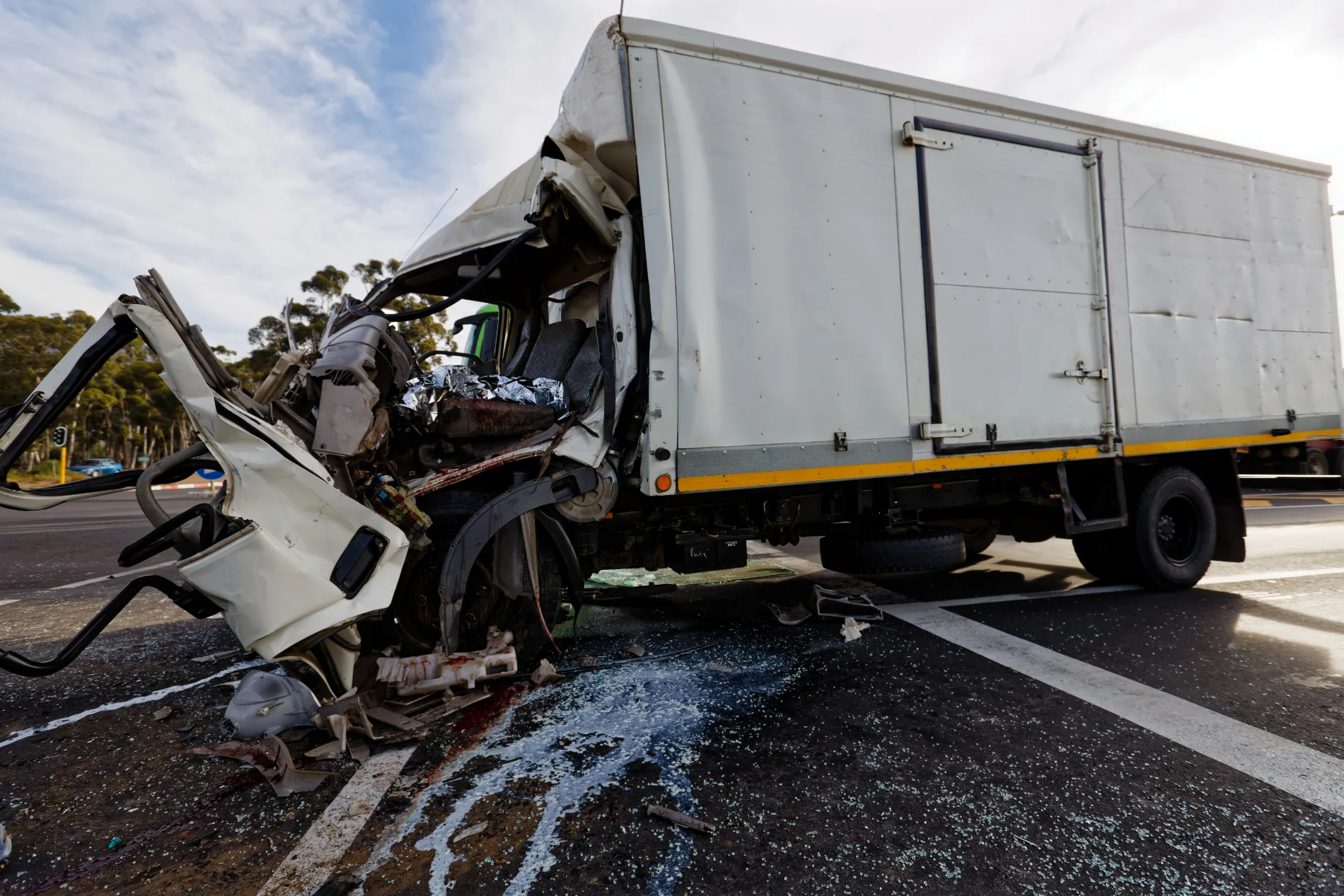
A wide right turn truck accident is a collision that occurs when a commercial truck swings into adjacent lanes during a right-turn maneuver, trapping or striking nearby vehicles. These crashes happen on Oregon and Washington roads – on urban intersections in Portland and Vancouver as well as freight corridors along I-5 and US-30 – and they raise specific questions about fault, negligence, and the state traffic laws that govern commercial vehicle turns. However, their sheer size and weight can pose significant challenges, particularly when making turns. One such challenge, and a frequent cause of serious collisions, is a wide-turn truck accident, especially during wide right turns.
These incidents can devastate motorists, passengers, cyclists, and pedestrians alike. Understanding how these collisions happen, why they’re so dangerous, and who might be liable, particularly in a truck-wide-right-turn accident fault analysis, is crucial for both legal awareness and roadway safety. Contact us today at 503-222-6333 to discuss your case and learn how we can help you.
Key Takeaways
Wide right turn truck accidents are often caused by driver error, including misjudging space, failing to check blind spots, improper signaling, or turning too quickly.
Fault may extend beyond the truck driver, as trucking companies can be liable for inadequate training, poor maintenance, or unsafe hiring practices that contribute to a crash.
Oregon’s comparative negligence laws allow injured victims to recover compensation, even if they are partially at fault, though their recovery is reduced by their percentage of responsibility.
Types of Right-Turn Truck Accidents
Wide right turns are difficult for truck drivers to perform because a semi-truck trailer can extend well beyond the truck’s cab. Road design and obstacles, such as streetlights or curbs, can also make these turns more difficult to perform. When you add in the potential for human error, you have a real recipe for disaster.
A relatively common type of right-turn truck accident happens when a truck veers into the lane of oncoming traffic. When truck drivers attempt to make a right turn, they may misjudge the width of their vehicle and the space available, causing them to swing too wide and collide with other vehicles or objects.
Another common scenario involves drivers trying to squeeze into the lane next to a truck that is preparing to complete a wide right turn. Collisions happen when the truck driver is unaware of the car next to them or if the driver does not anticipate the truck’s right turn.
Rollovers could also happen when a truck makes a right turn. Because of their higher center of gravity, a truck could tip over if the driver is going too fast or turning at too acute an angle. If the cargo is not properly secured or balanced, the shifting weight forces the truck to tip over or make a wider turn than expected.
How Wide Right Turns Lead to Accidents
Large commercial trucks and tractor-trailers must often execute wide right turns due to their long trailer lengths, multiple axles, and limited pivoting capability. A common misconception among passenger vehicle drivers is that trucks are attempting to “take up extra road space unnecessarily.” In reality, wide turns are essential for these vehicles to clear curbs, avoid fixed objects, or negotiate intersections safely. However, when surrounding drivers misjudge a truck’s intent or position, the risk of a truck-wide turn accident increases sharply.
In particular:
This cut-in effect is called off-tracking: the trailer wheels follow a tighter arc than the cab, shortening the turning radius and creating a zone where nearby vehicles can be squeezed or crushed. Off-tracking is a known physical property of long-wheelbase vehicles, and a truck driver who fails to account for it before turning may be found negligent per se under ORS 811.355 if the turn violates Oregon’s right-turn positioning rule. Proximate cause is established when the off-tracking motion directly contacts another vehicle, regardless of speed.
Trucks have large blind spots or “no-zones,” leaving lingering motorists at higher risk for accidents because they are not visible in the truck’s standard mirrors; and
Intersections with constrained space, narrow turning radii, or poorly timed traffic signals can compound these risks.
These types of collisions are especially dangerous because passenger vehicles often have little protection when caught beside or beneath a turning commercial truck. In many wide-right-turn crashes, the occupants of smaller vehicles have no time or space to react once the truck begins its turn. As a result, a wide-turn truck accident can cause severe injuries or fatalities even at relatively low speeds.
Understanding how these crashes occur is critical for determining liability and evaluating truck-wide-right-turn accident fault under Oregon and Washington traffic laws.
Why Do Right-Turn Truck Accidents Happen?
Wide right turn crashes in the Portland-Vancouver area frequently occur at intersections along NE Sandy Boulevard, SE Powell Boulevard, and the I-5 ramps near the Fremont Bridge, where truck traffic is heavy and turning radii are compressed by signals and curb infrastructure. In Tacoma, the SR-509 corridor and intersections near the Port of Tacoma generate similar risk patterns. Understanding where these crashes cluster helps attorneys identify relevant traffic data, witness pools, and municipal maintenance records that can support a fault analysis.
Driver errors might also include:
Backing up to complete a turn,
Entering a turning lane too quickly,
Failing to use windows and mirrors to make sure the way is clear, and
Attempting a right turn with the end of the vehicle too far from the curb.
Distracted driving, inexperience, and fatigue also contribute to unnecessary accidents, particularly when truck drivers are under time pressure or operating unfamiliar routes.
The Role of Blind Spots (No-Zones) and Passenger Vehicles
Passenger vehicles often get too close to the right side of a truck, mistakenly believing the space is safe to occupy. In reality, many commercial vehicles have large blind spots—commonly referred to as no-zones—on the front, back, and right side of the cab and trailer. Vehicles in these areas are effectively invisible to truck drivers unless the driver physically turns their head and checks mirrors thoroughly.
A wide right turn introduces a moment where a truck must swing right into adjacent lanes. If a passenger vehicle is in this no-zone, the truck driver may not see it at all, leading to preventable sideswipe collisions or right-turn “trap” crashes. According to safety data compiled by the Federal Motor Carrier Safety Administration (FMCSA), a significant share of truck accidents occur in rural areas (54%) and interstate highways (27%).
Understanding no-zones is key for motorists navigating near commercial trucks and for legal professionals analyzing fault after a collision.
Traffic Laws and Trucking Regulations in Oregon and Washington
Both Oregon and Washington have specific traffic laws and commercial vehicle regulations that govern how trucks must operate, including when they can make right turns. Violations of these laws can directly influence liability in a wide-turn truck accident.
Oregon Traffic Law (ORS) on Right Turns
Under Oregon law, drivers must make right turns as close to the right curb or edge of the roadway as practicable and must not swing left to make room for a right turn unless doing so safely. Failure to comply with this requirement may constitute negligence per se, meaning the violation itself establishes negligence if it causes an accident.
Washington Traffic Law on Right Turns
Washington’s law similarly states that turns must be made from the lane nearest the direction of travel and only when safe. A truck driver who makes an unsafe wide right turn or fails to signal or check blind spots may be cited under RCW and face civil liability in a truck-wide-right-turn accident fault determination.
Federal Motor Carrier Safety Administration (FMCSA) Regulations
Commercial truck operators must also comply with FMCSA standards, including hours-of-service rules (to prevent fatigued driving), vehicle maintenance requirements, and driver training mandates. A trucking company’s failure to enforce these regulations could form the basis for corporate liability in an accident involving a wide right turn.
Who Is at Fault for Truck Accidents Caused by Right Turns?
After a wide-right-turn accident, you might believe the truck driver is to blame. However, your ability to recover compensation depends on whether they acted negligently and whether their negligent actions caused the accident.
Negligence is a legal term with particular requirements. To prove negligence, you must show the following four elements:
The other driver owed you a duty of care—all drivers owe one another a duty to drive safely;
The other driver breached their duty of care by acting in a negligent, careless, or malicious manner;
The other driver’s breach of duty led to the accident; and
The accident caused you to suffer losses you can be compensated for.
Fault for the accident may also lie with someone other than the driver or with multiple parties.
Shared Fault and Comparative Negligence
In both Oregon and Washington, the law recognizes that more than one party can share fault in an accident. Oregon follows a modified comparative negligence system, meaning an injured party can recover damages even if they are partially at fault up to 50%, but their percentage of fault reduces their total recovery. Washington follows a pure comparative negligence system, which is essentially the same except that the person bringing the lawsuit can be up to 99% at fault.
Example: If a passenger vehicle driver is found to be 15% at fault for failing to stay out of a truck’s no-zone during a right turn, their compensation will be reduced correspondingly.
This is especially relevant in wide-right-turn truck accident cases involving multiple vehicles or ambiguous causal factors. It also means that insurance companies are likely to claim that you were disproportionately responsible for the accident. An experienced truck accident attorney will understand these tactics and can bring the necessary evidence to secure the compensation you deserve.
Liability Beyond the Driver
You may sue the trucking company if the driver was acting within the scope of employment at the time of the crash. Additionally, if inadequate maintenance, poor hiring practices, improper training, or failure to implement safety protocols contributed to the accident, the company may also be liable.
Other potential defendants include:
Vehicle manufacturers (defective brakes, steering, or signal lights),
Maintenance providers (faulty repairs),
Contractors or subcontractors (if load shifting caused instability), or
Government municipalities (poorly maintained or marked roads)
Understanding liability in a truck accident is no simple matter. Consulting with an experienced attorney is key to ensuring your claim is filed against the appropriate party or parties.
Wide Turn Accident Injuries
Wide right turns by semi trucks can have serious consequences, leading to accidents that can cause significant damage and injury. Occupants of smaller vehicles in a truck crash are at a high risk of injuries and fatalities because of the incredible forces involved in these wrecks. In most cases, the truck driver walks away unscathed while those in other vehicles suffer life-threatening or deadly injuries.
Wide right turns often result in severe or catastrophic injuries because passenger vehicles are particularly vulnerable in collisions with heavier commercial vehicles. According to the National Safety Council, in 2023, large truck accidents accounted for 9% of all vehicle fatalities, but only 10% of all vehicle miles traveled.
Common injuries caused by wide right turns are:
Traumatic brain injuries,
Spinal cord injuries,
Fractures and broken bones,
Cuts and lacerations, and
Internal injuries.
Once you have evidence that you were hurt and there is a clear case of negligence, you can pursue compensation for your injuries through a personal injury insurance claim or lawsuit. You can request compensation for:
Medical expenses;
Wage loss;
Pain and suffering;
Emotional distress and mental anguish;
Disability;
Disfigurement;
Loss of enjoyment of life;
Loss of earning capacity;
Loss of society and companionship; and
Property damage, when applicable.
The financial burden of your injuries can be significant, with medical expenses, rehabilitation costs, and lost wages adding up quickly. It is important to hold the responsible parties accountable and seek compensation to cover your losses.
Common Questions About Wide-Turn Truck Accidents
Wide-right-turn truck accidents raise many questions for drivers, passengers, and families affected by these serious collisions. Because commercial trucks operate under different rules and face unique driving challenges, understanding how wide right turns work and who may be responsible when something goes wrong is critical. The following are common questions about wide-right turns, liability, and safety in accidents involving large commercial trucks.
Are Trucks Allowed to Make Wide Turns?
Yes. The law permits commercial trucks to make wide right turns when necessary due to their size, pivot point geometry, and federal and state regulations. However, they must do so safely, using turn signals, mirrors, and yielding to other road users.
What Is a Wide Right Turn, and Why Do Trucks Need to Make Them?
A wide right turn occurs when a truck’s rear trailer wheels do not follow the same arc as the front cab. This requires the truck to move farther into adjacent lanes to prevent the rear from clipping curbs, pedestrians, or fixed objects. While necessary, these turns can place other vehicles at risk if not executed properly.
What Injuries Are Common in Wide-Right-Turn Truck Accidents?
Injuries often include traumatic brain injuries, spinal cord injuries, fractures, internal bleeding, amputation, and psychological trauma, often more severe due to the size mismatch between commercial trucks and passenger vehicles.
Why Do Truck Drivers Make Wide Right Turns?
Large trucks need extra space to turn due to their length and trailer swing. Drivers may swing left before a right turn to avoid obstacles, creating risk for nearby vehicles.
Who Is Usually at Fault in a Wide Right Turn Truck Accident?
Fault depends on crash details. Truck drivers may be at fault for not checking mirrors, signaling, or confirming a safe turn, though surrounding traffic can also influence the outcome.
Are Wide Right Turn Accidents Considered Driver Error?
Wide right-turn accidents often result from driver error, but other factors, such as training gaps, poor supervision, narrow roads, or bad vehicle setup can also play a role.
Can a Passenger Vehicle Be Partially at Fault in a Wide Right Turn Accident?
Yes. Passenger vehicles may share fault if they act in a way that contributed to the accident, including maneuvers such as passing a truck on the right or ignoring its turn signals. Responsibility is based on traffic laws, vehicle positions, and driver actions before the crash.
Why Are Wide Right Turn Truck Accidents so Dangerous?
Wide turn accidents are dangerous because smaller vehicles can be trapped or crushed. The truck’s size and weight often cause severe damage and serious injuries.
Where do wide right turn truck accidents most commonly occur in the Portland area?
A: Wide right turn truck accidents in the Portland metro area occur frequently at high-traffic intersections on NE Sandy Boulevard, near the I-84/I-205 interchange, and along SE Powell Boulevard where commercial truck routes cross residential corridors. Ramp intersections on I-5 near downtown Portland present additional risk because of compressed turning geometry and high pedestrian and cyclist traffic. If your accident occurred at one of these locations, documenting the specific road configuration and traffic signal timing can be an important part of your claim.
Who is at fault when a truck makes a dangerous wide right turn?
Fault in a dangerous wide right turn truck accident depends on whether the truck driver breached the duty of care owed to other road users. Under Oregon law (ORS 811.355), drivers must complete right turns as close to the curb as practicable. A truck driver who swings too wide, fails to check mirrors, or neglects to signal may be found negligent per se. Washington law under RCW 46.61.290 imposes similar requirements. If the trucking company failed to train the driver properly or ignored known route constraints, the company may share liability.
D’Amore Law Group Can Help You
The attorneys at D’Amore Law Group know that when you or a loved one has suffered a serious injury or death, you need the very best legal representation. Tom D’Amore has dedicated his practice to helping accident victims for more than 30 years and was recognized as one of the “Best Lawyers in America” in 2023, 2024, and 2025. Contact us today to schedule a free case evaluation.
Legal References Used to Inform This Page
To ensure the accuracy and clarity of this page, we referenced official legal resources during the content development process.
Tom D'Amore is the founder of D'Amore Law Group and a trial attorney with over 30 years of experience representing injured people and their families across the West Coast, securing more than $325 million in recoveries. He handles cases involving car accidents, trucking accidents, construction injuries, medical malpractice, and sexual abuse. Licensed in Oregon, Washington, and California, Tom is the only NBTA board-certified truck accident attorney in Oregon. He is a national Board of Governors member, past Executive Committee member, and past Budget and Audit Chair of the American Association for Justice, as well as past President of the Oregon Trial Lawyers Association and an Eagle member of the Washington State Association for Justice.
When people think of serious truck crashes, they often picture high-speed collisions on highways. But many devastating incidents happen at much lower speeds, often in parking lots, construction zones,...
If you were seriously injured in a commercial truck crash, one of the first questions on your mind is likely, “How much is a Tacoma truck accident case worth?”...
Insurance adjusters move fast after serious truck crashes. Insurance adjuster tactics after truck accidents in Tacoma often include pushing for recorded statements, downplaying injuries, and pressuring victims into quick...
Human error is one of the most common causes of truck rollover accidents. Determining the cause of a rollover accident is critical because it directly impacts a victim’s ability...
If you or someone you love has been hurt in a truck crash, you may be searching for answers. Understanding the most dangerous roads for truck accidents in Tacoma...
After a serious truck accident, it is hard to know what matters most. You may be dealing with injuries, vehicle damage, and calls from insurance companies, all while trying...
If you were injured in a serious truck crash on Interstate 5, you’re not alone, and you’re not imagining how overwhelming it feels. Truck accidents on I-5 in Tacoma...
After a serious crash with a commercial truck, one of the first questions injured people ask is: Who can I hold responsible? Understanding who is liable in a Tacoma...
Rear-end collisions involving commercial trucks often cause far more damage than similar crashes between passenger vehicles. In rear-end truck accidents in Tacoma, the size and weight of the truck...
In underride truck accidents in Tacoma, the danger is not speed. It is geometry. A smaller vehicle slips beneath a tractor-trailer, and the crash bypasses airbags, crumple zones, and...