Forklift use is widespread across numerous industries and integral to warehouse operations, construction sites, and manufacturing. Unfortunately, while forklifts are essential to lifting and moving heavy materials, forklift accidents are not uncommon, posing significant risks to operators and those working nearby.
So, what are the main causes of injuries when using forklifts? This article delves into common forklift accidents, shedding light on contributing factors, such as lack of proper training, poor communication, and operator error. In addition, the article stresses the importance of hiring a board-certified forklift accident attorney. Recognizing why forklift accidents occur is the first step in preventing them and ensuring a safe work environment. But when all else fails, working with a skilled attorney protects your rights, ensuring a smoother, more successful settlement and recovery process.
What Are the Most Common Causes of Forklift Injuries?
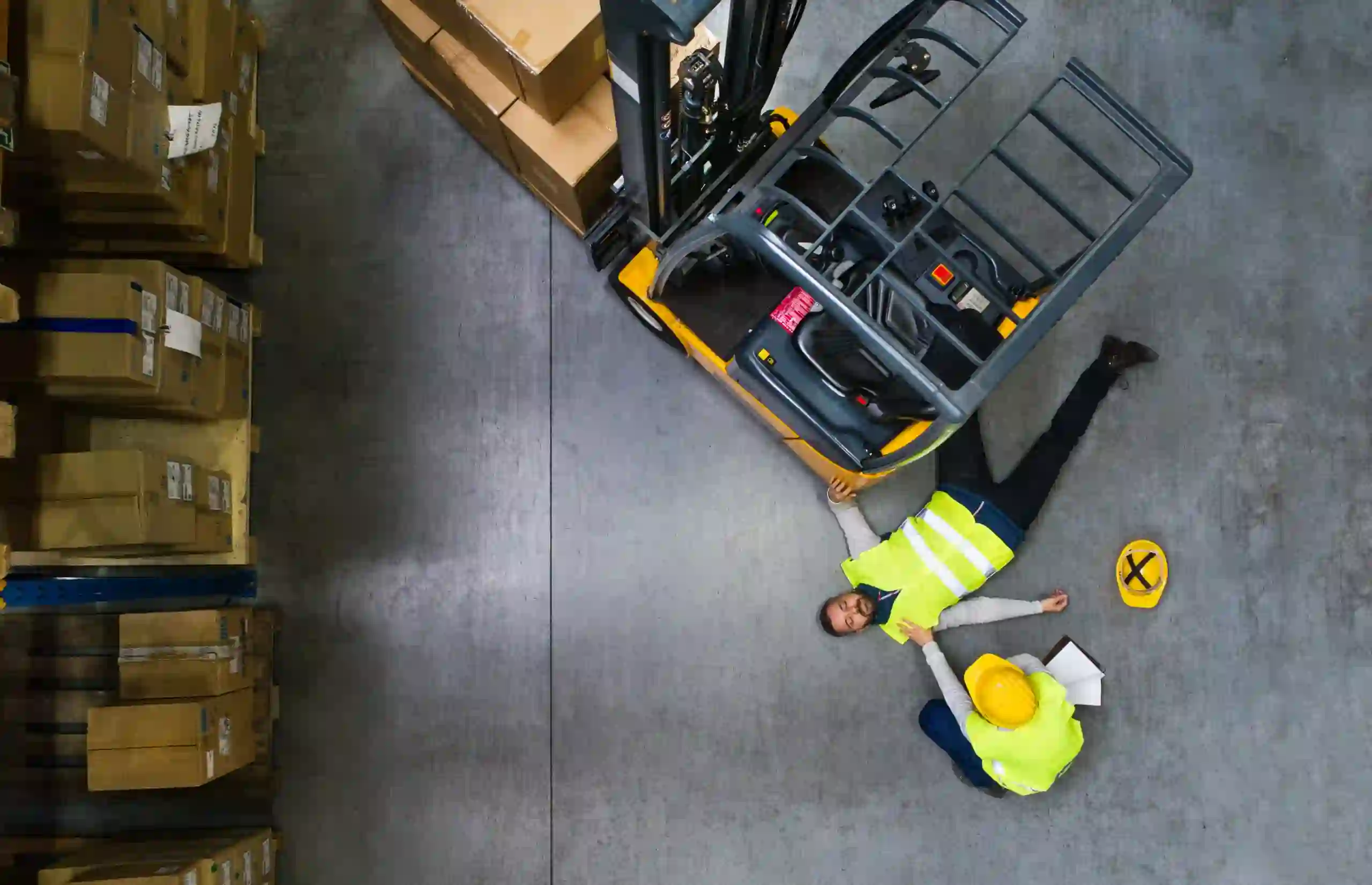
Nearly 1 million powered industrial trucks (forklifts) operate in US companies today. So it’s not surprising that forklift injuries come in many forms, ranging from minor bruises to severe fractures and even fatalities. But what are the main causes of injuries when using forklifts? The most common injuries occur when:
- Workers accidentally drive lift trucks off loading docks;
- Lifts plummet into the gap between docks and an unsecured trailer;
- Lifts roll or overturn;
- Lift trucks hit someone; and
- When a worker falls from elevated pallets and tines.
Understanding why these hazards occur is crucial to mitigating them. Next, we will explore some of the reasons.
What Are the Main Reasons for a Forklift Accident at Work?
Forklift injuries commonly result from vehicle tip-overs, collisions with pedestrians, falling or shifting loads, and falls from forks or platforms. These incidents often result from operator error, inadequate training, or unsafe workplace conditions.
Understanding the primary reasons for forklift accidents that lead to forklift injury is crucial for staying safe, avoiding these injuries, and implementing effective preventive measures. The following are the most common reasons for workplace forklift accidents.
Lack of Proper Training
One of the primary causes of forklift accidents is inadequate training. Operating a forklift requires specialized skills and knowledge of safety procedures. Operators who are untrained and uncertified on the specific forklift model they are using or those unfamiliar with safety protocols are more likely to struggle to navigate the vehicle safely, increasing the likelihood of collisions, tip-overs, and other accidents. Employers must prioritize forklift safety training and education and workplace safety protocols. Regular safety initiatives and ongoing refresher courses also help strengthen best practices and promote a culture of organizational safety.
Operator Error
Another leading cause of forklift injuries is operator error. Operator error can occur when operators lack proper training or are negligent in following operational procedures. Mishandling controls and driving at excessive speeds can lead to tipping, collisions, or dropping loads, which can cause severe injuries. Additionally, distractions such as using mobile phones or engaging in non-work-related conversations while operating a forklift can compromise reaction time, leading to serious accidents, including collisions with nearby obstacles or pedestrians.
Poor Workplace Layout and Design
A workplace not designed with forklift operations in mind can contribute to accidents. Poor visibility, congested or narrow aisles, improper stacking, insufficient signage, and lack of pedestrian walkways can create hazardous conditions for forklift operations, increasing the risk of collisions and injuries. Cluttered or unstable storage areas also pose a significant risk. Employers should design work environments to minimize potential accidents, implementing clear signage, designated traffic lanes, and unobstructed pathways.
Improper Maintenance and Mechanical Failures
Forklifts that are not regularly inspected and serviced are more prone to mechanical issues, such as hydraulic lift failures, brake malfunctions, and steering problems, increasing the likelihood of accidents. Employers must prioritize routine maintenance and promptly address any issues identified during inspections to ensure safe forklift operations.
Poorly Secured Loads
Improperly secured or imbalanced loads can shift during transport, causing a forklift to tip or the materials to fall, potentially leading to injury. Operators need to ensure loads are evenly distributed and secure before moving them.
Lack of Communication
Improper communication and coordination among workers and failure to establish clear pedestrian and forklift interaction protocols can lead to misunderstandings and unsafe practices. Employers should encourage open communication between forklift operators and other personnel, emphasizing the importance of signaling, being aware of surroundings, and exercising caution in shared workspaces.
Why Do I Need a Board-Certified Forklift Accident Lawyer?
If you were involved in a forklift accident at work, seeking legal guidance from a skilled truck and forklift accident attorney is crucial. When choosing an advocate, it is equally important to consider their qualifications and experience, particularly in similar cases.
D’Amore Law Group emphasizes the importance of selecting a truck accident attorney certified by the National Board of Trial Advocacy. To become certified in Truck Accident Law, attorneys must dedicate a significant portion of their practice to trucking litigation, accumulate hands-on experience in multiple truck accident cases, and pass a comprehensive written examination. The certification is a testament to the lawyer’s commitment to excellence and readiness to handle complex litigation associated with truck and forklift accidents.
By choosing a board-certified attorney, clients can rest assured that their lawyer’s qualifications have already been meticulously vetted and verified and their expertise rigorously examined. Board-certified Tom D’Amore of the D’Amore Law Group is a fine example of the high standards required for certification in his field.
D’Amore Law Group: Your Experienced Forklift Accident Advocates
Since 1992, D’Amore Law Group has been a staunch advocate for victims of personal injury and truck accidents, securing a multitude of accolades such as Super Lawyers by Thomson Reuters, Best Lawyers, and the AV Preeminent rating by Martindale Hubbell. Renowned for our empathy, tenacity, and expertise, the D’Amore Law Group team has successfully resolved over 2,000 cases. With our expertise, knowledge, and commitment to justice, we can help you navigate the legal process and pursue the forklift accident compensation you deserve. Moreover, unlike other law firms, we do not charge upfront fees and only take a fee if you recover.
Contact us anytime, day or night, for a no-cost case evaluation. And remember, when it comes to legal representation, choosing a board-certified attorney certified by the National Board of Trial Advocacy ensures that your case is in capable hands.
Portland Construction Injury Deadline Calculator
Enter the date of your injury to see the deadline that generally applies to your situation under Oregon law.
Disclaimer: This calculator provides general deadline estimates only and is not legal advice. Construction injury cases frequently involve both a workers' compensation claim (against your employer) and a separate civil claim (against a negligent third party) at the same time, each running on entirely different deadlines. D'Amore Law Group handles third-party civil claims and does not handle workers' compensation claims directly. Some deadlines may run from treatment dates, work-loss dates, the date of death, notice-filing dates, claim denial dates, or other case-specific events rather than the injury date alone. This calculator applies to Oregon cases only; Washington injury claims generally carry a three-year deadline instead (RCW 4.16.080). Always verify deadlines with a licensed Oregon attorney.
Frequently Asked Questions
What are the main causes of forklift injuries in the workplace?
The main causes of forklift injuries include overturn accidents, collisions with pedestrians or other vehicles, workers being struck or crushed by the forklift, falls from elevated pallets, and workers or lift trucks falling off loading docks. Inadequate operator training, poor workplace layout, and imbalanced or unsecured loads are the most common contributing factors. Approximately 85 fatal forklift accidents and nearly 35,000 serious injuries occur in the United States every year.
What is the most common injury caused by working with machines unsafely?
The most common injuries caused by unsafe machinery operation include amputations, lacerations, fractures, and crush injuries, with machinery-related amputations representing one of the most serious recognized workplace hazards. Workers are most often hurt when they reach into equipment to clean or adjust it while it is still powered, fail to use lockout/tagout procedures, or operate machinery without adequate guarding in place. Employers are legally required to provide proper machine guarding, safety training, and enforced lockout procedures to prevent these injuries.
What is another main cause of forklift injuries beyond overturns and pedestrian strikes?
Beyond overturns and striking pedestrians, a major cause of forklift injuries is workers falling from elevated platforms, tines, or pallets that are being used as improvised lifts. Other significant causes include collisions with other forklifts or fixed structures, loads falling on workers due to improper securing or stacking, and operators driving off the edge of a loading dock when there is no barrier or trailer is unsecured. Employers and site operators who fail to implement proper safety protocols can be held liable when these preventable accidents occur.
What legal options does an injured construction or warehouse worker have after a forklift accident?
A worker injured in a forklift accident may be entitled to workers’ compensation benefits covering medical costs and a portion of lost wages, and may also have a personal injury claim against a third party such as a negligent contractor, equipment manufacturer, or staffing agency. In Oregon and Washington, injured workers can pursue both types of claims simultaneously in many circumstances, which can significantly increase the chances of obtaining a full recovery. Because forklift accident cases often involve complex questions of employer liability, third-party negligence, and equipment defect, consulting an experienced construction accident attorney as soon as possible is strongly advisable.
About the Author
Tom D'Amore is the founder of D'Amore Law Group and a trial attorney with over 30 years of experience representing injured people and their families across the West Coast, securing more than $325 million in recoveries. He handles cases involving
car accidents,
trucking accidents,
construction injuries,
medical malpractice, and
sexual abuse. Licensed in Oregon, Washington, and California, Tom is the only NBTA board-certified truck accident attorney in Oregon. He is a national Board of Governors member, past Executive Committee member, and past Budget and Audit Chair of the American Association for Justice, as well as past President of the Oregon Trial Lawyers Association and an Eagle member of the Washington State Association for Justice.